The use of IP addresses in fraud prevention has always rested on a practical assumption: a network connection can reveal something meaningful about the person, device, or environment behind it. That relationship is becoming less reliable as organized fraud groups turn network identity into a resource. Proxies and rotating IP services allow network identities to be acquired on demand, enabling a connection to appear as if it comes from a local residential user, a mobile subscriber, or a customer in a specific market without reflecting the actual origin of the activity.
Agentic AI is accelerating this shift. Many fraud schemes already rely on proxy infrastructure, but automation increases the speed, scale, and efficiency with which those resources can be consumed. Attacks can now rotate through large pools of network identities with far less manual effort than before. For fraud teams, surface-level IP attributes now carry less meaning on their own; the real value lies in understanding the infrastructure behind the connection.
How Agentic AI Changes Fraud Operation
The significance of Agentic AI lies less in the mechanics of individual attacks and more in the economics of operating them. Fraud schemes that once required specialized tooling, infrastructure management, and continuous manual effort are becoming easier to build, adapt, and maintain. Tasks that previously depended on separate tools, scripts, and operators can increasingly be coordinated through AI-assisted workflows, reducing the expertise required to run large-scale abuse operations.
This shift is particularly relevant in fraud environments that depend on network identity. Whether the objective is taking over an account, abuse a promotion campaign or payment fraud, large-scale operations require a constant supply of seemingly legitimate network identities. As attack workflows become easier to scale, so does the demand for proxies and rotating IP services capable of supplying those identities.
Account recovery provides a useful example. Linear brute-force logins are easily automated, but account recovery is a complex branching workflow of SMS challenges, security questions, and fallback identity checks. Agentic systems are better suited to navigating these branching workflows because the objective remains constant even when the path changes. For fraud teams, the challenge is that each recovery attempt may appear to originate from a different residential or mobile network, making infrastructure-level visibility increasingly important.
What IP Profiling Reveals
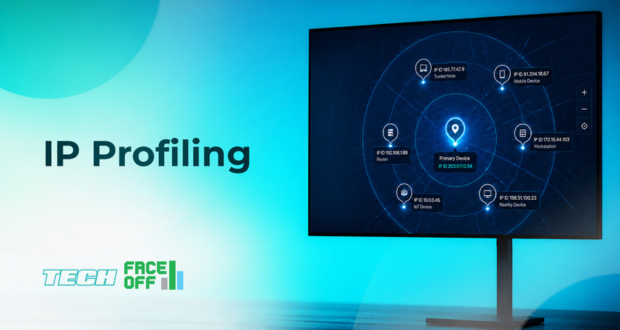
The reality is: though masked, network infrastructure does not disappear. In this environment, IP profiling helps expose the machinery behind a connection.
User Onboarding
The earliest signs of an automated operation often appear in the infrastructure. AI agents typically operate from cloud infrastructure or proxy networks, therefore, by identifying whether an IP address belongs to a data center, proxy service, or other anomalous IP range, organizations can surface large-scale account registration and automated abuse before those accounts gain a foothold in the system. The goal is a graduated response, not a binary allow-or-block decision. For example:
Transaction Authorization
At authorization, IP profiling helps close the gap between a transaction’s surface behavior and its underlying infrastructure. When AI makes behavioral signals look routine, the transaction may pass surface-level checks while still carrying infrastructure-level risk. IP profiling reveals whether the connection relies on proxy infrastructure or IP ranges with historical abuse patterns, and returns a quantified risk score from 0-100, helping teams trigger 3D Secure, stricter review, or direct blocking to reduce card fraud and chargeback risk exposure.
Post-Attack Learning
IP profiling also gives fraud teams a memory of the infrastructure behind each attack. High-risk IP features, proxy patterns, and recurring network traits can be carried forward into rules, model features, watchlists, and compliance reviews. Over time, this helps teams spot where Agent-driven abuse is clustering, adjust risk weights with more confidence, and support transaction monitoring or sanctions investigations where network origin becomes part of the evidence. Each confirmed pattern makes the next attack harder to hide.
Infrastructure Is Only One Layer of the Story
IP profiling is strongest when asked the right question. It can explain the network environment behind an activity, but it should not be expected to explain the entire activity itself. A proxy signal may justify closer review, and a high-risk IP range may help explain suspicious routing, but neither can determine who controls the account or whether the transaction makes business sense.
That distinction becomes more important with Agentic AI. A single operation may use the same network infrastructure across different accounts, devices, and transaction paths, while changing its behavior from one attempt to the next. IP profiling can expose part of that shared operating layer, but the full risk picture still depends on how that infrastructure connects with device integrity, identity quality, behavioral consistency, and transaction context.
In A Nutshell, Why Infrastructure Visiblity is Now Central to Fraud Defense
The larger shift is that fraud prevention is moving from checking whether an action looks legitimate to understanding how that legitimacy is being produced. Agentic AI makes fraudulent activity easier to assemble and scale, while proxy infrastructure gives it a convincing network surface.
IP profiling matters because it exposes part of that production layer. As fraud becomes more manufactured, infrastructure visibility becomes central to understanding how the attack is built.
Get Free Trial of TrustDecision IP Profiling on AWS Marketplace.