TrustDecision Global Risk Pulse · Issue 4
Weekly Insights on Fraud, Credit, Identity, Payments and Digital Risk
November 16–22, 2026
Theme of the Week: From Digital Credit Expansion to Network-Level Fraud Prevention: Emerging Markets Are Reshaping Financial Risk Management
Keywords: Digital Consumer Credit | SME Lending | Open Finance | AI Fraud Prevention | Account Networks | Cross-Border Payments | Tokenised Finance | Agentic AI Governance
01 | Weekly Overview
Last week, three developments stood out across overseas digital business and financial risk markets.
First, digital consumer credit continued to expand across Southeast Asia, while financial regulators moved to strengthen the supporting infrastructure.
According to Momentum Works' latest report, Southeast Asia's digital platform-based consumer credit loan book reached an estimated US$19.8 billion at the end of H1 2026. Indonesia, the Philippines and Thailand remained the region's major markets. Meanwhile, Bank Indonesia and the Bangko Sentral ng Pilipinas raised their policy rates, while Bank Negara Malaysia introduced its Open Finance regulatory framework. Digital lending growth and financial infrastructure regulation are advancing in parallel.
Second, Credit Risk and Fraud Risk are becoming increasingly interconnected across emerging markets.
Bank lending in Indonesia grew 13.21% year-on-year in October, while Malaysian corporate lending expanded by 8.8% in Q3. In contrast, SME and consumer lending in Thailand continued to contract. In Latin America, Brazilian households remained under significant debt-servicing pressure, while Mexico's consumer credit market continued to grow. These divergent market conditions are increasing the need for financial institutions to assess identity authenticity, repayment capacity and potential fraud risks together.
Third, cross-institutional risk collaboration and AI governance are emerging as key priorities in financial infrastructure development.
Bank Negara Malaysia released its feedback statement on AI adoption in the financial sector, while the Monetary Authority of Singapore (MAS) issued guidance on the tokenisation of bank deposits and advanced initiatives related to AI-enabled financial transactions. Meanwhile, fraud cases across Indonesia, Singapore and Latin America highlighted the continued threat posed by account networks, money mules and cross-border fund transfers.
Key Takeaway:
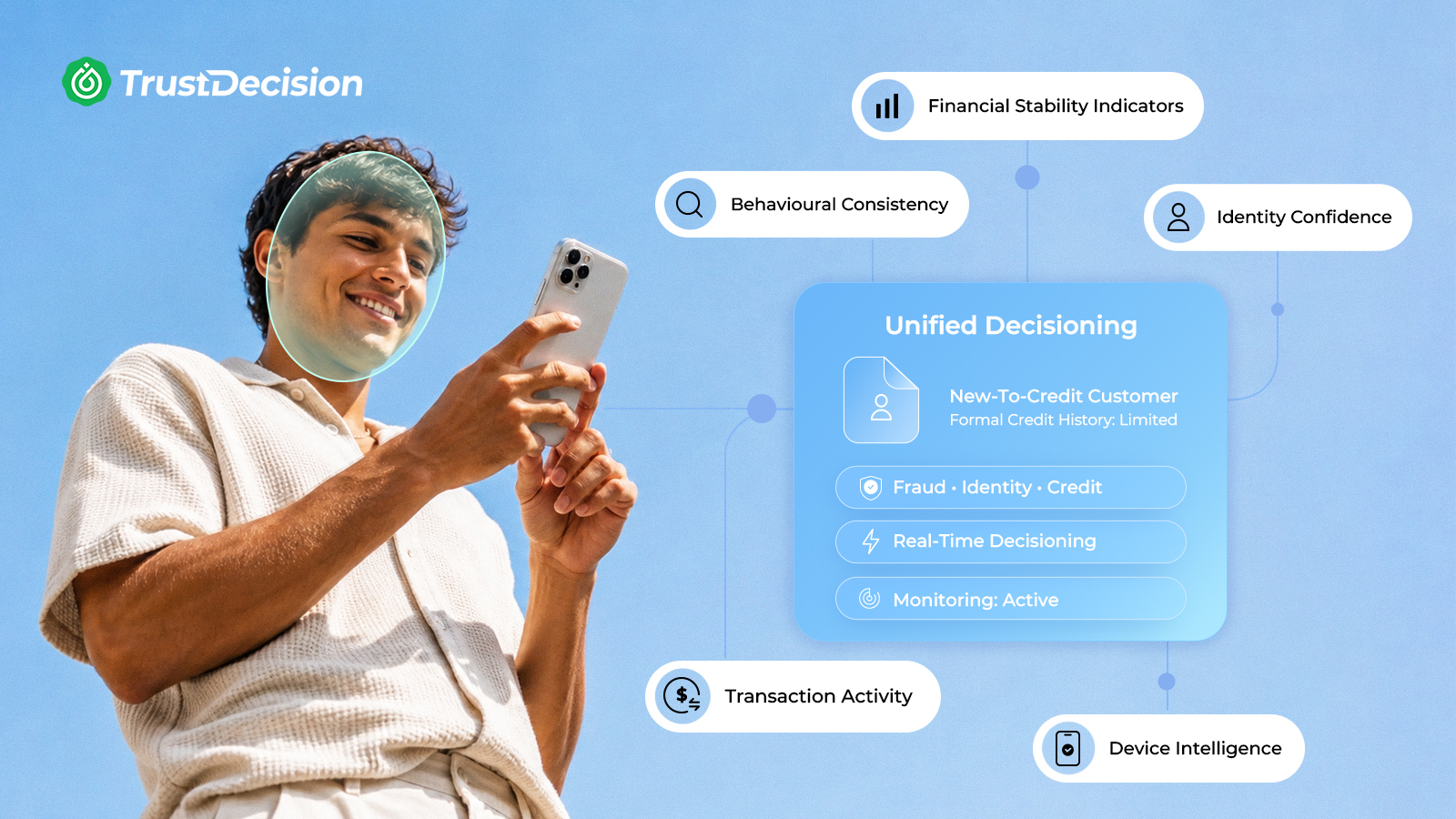
Emerging-market digital finance is moving beyond business expansion toward competition in data, credit intelligence and risk management capabilities. Financial institutions increasingly need to integrate identity verification, credit assessment, transaction monitoring and network analysis into a unified risk decision-making framework.
02 | Policy & Regulation
Indonesia | Bank Indonesia Raises Policy Rate to 6.00%
November 18, 2026
Bank Indonesia raised its benchmark BI-Rate by 25 basis points to 6.00%. The Deposit Facility and Lending Facility rates were adjusted to 5.25% and 6.75%, respectively.
The move aims to stabilize the Indonesian rupiah, manage global uncertainties and keep inflation within the central bank's target range for 2026–2027.
At the same time, Bank Indonesia reiterated its commitment to supporting economic growth through accommodative macroprudential policies and maintaining financial system stability.
Implications: Indonesia is balancing currency stability with continued credit expansion. Changes in interest rates may affect funding costs, lending rates and borrowers' repayment capacity. Digital banks and consumer finance providers should closely monitor credit quality and portfolio performance.
Philippines | Central Bank Raises Policy Rate by 50 Basis Points to 5.50%
November 16, 2026
The Bangko Sentral ng Pilipinas (BSP) raised its overnight reverse repurchase rate by 50 basis points to 5.50%. The overnight deposit and lending facility rates were adjusted to 5.00% and 6.00%, respectively.
The move aims to tighten monetary conditions, contain inflationary pressures and stabilize inflation expectations.
The decision reflects continued pressure from energy prices, import costs and foreign exchange movements.
Implications: Higher policy rates may increase funding costs for consumer loans, credit cards and digital lending products. Financial institutions should pay closer attention to borrower affordability, lending prices and asset quality in the Philippine consumer finance market.
Malaysia | Bank Negara Malaysia Establishes an Open Finance Regulatory Framework
November 17, 2026
Bank Negara Malaysia (BNM) released its Policy Document on Open Finance, establishing a regulatory framework for secure and consent-based financial data sharing.
Key provisions include:
- Defining participating institutions and the scope of customer information that may be shared.
- Establishing implementation timelines for mandatory participants and data-sharing arrangements.
- Setting requirements for obtaining, monitoring, renewing and revoking customer consent.
- Strengthening customer data protection and security controls.
- Enhancing technology risk management and cybersecurity requirements.
The policy document took effect upon publication on November 17.
Implications: Open Finance will expand the range of data available to financial institutions, creating new opportunities for digital lending, customer risk assessment and personalized financial services. At the same time, customer consent, data accuracy, privacy protection and third-party risk management will become increasingly important.
Malaysia | BNM Releases Feedback Statement on AI Adoption in the Financial Sector
November 19, 2026
Bank Negara Malaysia published its Feedback Statement on Artificial Intelligence in the Malaysian Financial Sector.
Based on feedback from 113 respondents, including financial institutions, payment service providers, insurers and technology companies, the statement outlines AI adoption opportunities, emerging risks and governance priorities.
Key areas include:
- AI governance and accountability.
- Data management and data quality.
- Model risk management.
- Talent and technological capabilities.
- Industry collaboration and responsible AI innovation.
The statement reflects regulatory feedback and policy direction rather than a new binding AI regulation.
Implications: AI is moving beyond operational support into fraud detection, credit assessment and financial decision-making. As adoption expands, model governance, data quality and decision explainability will become increasingly important regulatory considerations.
Malaysia | BNM Proposes Stronger Product Governance and Risk Management
November 20, 2026
Bank Negara Malaysia released an Exposure Draft on Product Governance and Risk Management, proposing stronger governance requirements throughout the financial product lifecycle.
The proposed framework emphasizes:
- Pre-launch product assessment and approval.
- Identification and management of product-related risks.
- Effective risk control mechanisms.
- Clear accountability for boards and senior management.
- Fair treatment of customers throughout the product lifecycle.
The document is an exposure draft rather than a final regulation. The consultation period is scheduled to close on February 28, 2027.
Implications: Regulatory expectations are expanding beyond pre-launch product approval toward continuous lifecycle management. Digital lending, BNPL and fintech providers will need to strengthen customer suitability assessments, risk-based pricing and ongoing monitoring.
Singapore | MAS Issues Guidance on the Tokenisation of Bank Deposits
November 18, 2026
The Monetary Authority of Singapore (MAS) released its Guide on the Tokenisation of Bank Deposits, alongside updated guidance on the definition of a deposit.
The guidance clarifies how tokenised bank deposit products should be assessed under the Banking Act and emphasizes appropriate disclosures of product risks and customer rights.
Key considerations include:
- The legal classification of tokenised deposits.
- Deposit protection and customer disclosures.
- Conditions governing token transfers.
- Distributed ledger and record management.
- Technology failures and operational risks.
MAS also advanced Project Guardian, publishing a tokenised collateral framework covering asset eligibility, custody, valuation, return and enforcement processes.
Implications: Tokenised financial assets are moving from experimentation toward clearer regulatory and commercial applications. As digital assets, bank deposits and cross-border settlement become increasingly interconnected, institutions will need stronger controls over participant identity, asset authenticity, custody security and settlement risk.
Mexico | Banxico Publishes Latest Monetary Policy Meeting Minutes
November 19, 2026
Banco de México (Banxico) published the minutes of its November 5 monetary policy meeting on November 19.
The publication provides further insight into the central bank's assessment of inflation, economic activity and the future direction of monetary policy.
The release represents meeting minutes from an earlier policy decision rather than a new rate adjustment announced during the reporting period.
Implications: Mexico's monetary policy outlook will continue to influence bank funding costs, consumer lending rates and household repayment capacity. Digital banks and consumer finance providers should incorporate interest rate conditions into their credit risk assessments.
03 | Market & Business Developments
Southeast Asia | Digital Consumer Credit Outstanding Reaches US$19.8 Billion
Momentum Works' Consumer Credit in Southeast Asia 2026 report estimates that digital platform-based consumer credit outstanding across six major Southeast Asian markets reached approximately US$19.8 billion in H1 2026.
Market breakdown:
- Indonesia: US$8.6 billion.
- Philippines: US$4.3 billion.
- Thailand: US$2.9 billion.
Monee accounted for approximately 45% of the regional digital consumer credit market. Together, Monee, Grab, GCash and GoTo represented approximately 60%.
Platform-based lending is expanding beyond traditional bank loans into e-commerce platforms, digital wallets and independent fintech lenders.
Business Implications: Competition in Southeast Asian consumer finance is increasingly driven by customer acquisition, embedded lending scenarios, data capabilities and risk-based pricing. The expansion of platform lending and BNPL will also increase demand for identity fraud detection, credit risk assessment and multiple-loan exposure monitoring.
Indonesia | Bank Lending Maintains Double-Digit Growth
Bank Indonesia reported that bank lending grew 13.21% year-on-year in October 2026.
By category:
- Investment loans grew 21.32%.
- Working capital loans grew 12.99%.
- Consumer loans grew 4.73%.
As of September 2026, the banking sector's gross NPL ratio stood at 2.07%, while the net NPL ratio was 0.82%.
Business Implications: Indonesia remains in a strong credit expansion cycle, driven primarily by corporate investment and working capital demand. Financial institutions should strengthen borrower identity verification, loan application fraud detection and post-disbursement portfolio monitoring.
Malaysia | Corporate Financing Demand Remains Strong
BNM's Q3 2026 data showed:
- Private non-financial sector credit grew 6.3% year-on-year.
- Corporate lending increased 8.8%, up from 7.3% in Q2.
- Household lending grew 5.3%.
Corporate loan growth was primarily supported by working capital demand.
Business Implications: Malaysia's corporate financing market continues to offer growth opportunities, particularly in SME and working capital lending. Financial institutions should strengthen business identity verification, operational assessment and continuous credit risk monitoring.
Thailand | Large Corporate Lending Grows as SME and Consumer Lending Contract
The Bank of Thailand reported that the banking system's loan portfolio grew 4.0% year-on-year in Q3 2026, primarily driven by large corporate borrowers.
However, SME and consumer lending continued to contract.
Asset quality indicators included:
- Banking sector NPL ratio: 2.82%.
- Stage 2 loan ratio: 6.68%.
Business Implications: Thailand's credit market is showing structural divergence. Large corporate financing demand remains relatively strong, while SMEs and households continue to face repayment pressure. Consumer finance providers should focus on early delinquency indicators, income volatility and borrower indebtedness.
Philippines | Digital Consumer Credit Emerges as a Major Regional Growth Market
Momentum Works estimates that the Philippines' digital platform-based consumer credit outstanding reached approximately US$4.3 billion in H1 2026, making it Southeast Asia's second-largest market in this category.
E-commerce platforms, digital wallets and fintech lenders are becoming increasingly important participants in the consumer finance ecosystem.
Meanwhile, the BSP raised its policy rate to 5.50% on November 16, reflecting tighter monetary conditions.
Business Implications: Digital lending growth and higher interest rates are occurring simultaneously. Financial institutions should closely monitor online loan application fraud, credit risk pricing and borrowers' repayment capacity.
Brazil | Household Debt and Personal Loan Delinquencies Remain Elevated
According to the latest available data from Banco Central do Brasil, the financial system's total credit balance reached approximately BRL 7.4 trillion in September 2026.
Key household credit indicators included:
- Household debt-to-income ratio: 50.1%.
- Household debt service-to-income ratio: 29.0%.
- Delinquency rate on non-earmarked household loans: 8.1%.
The household debt and debt-service figures refer to August 2026, while the delinquency figure refers to September 2026.
Business Implications: Brazil remains a large consumer finance market, but high interest rates and household repayment pressure are increasing credit risks. Credit card issuers, personal lenders and unsecured consumer finance providers need more accurate assessments of income stability, existing liabilities and repayment capacity.
Mexico | Digital Banks Continue to Drive Consumer Credit Expansion
BBVA Research reported that Mexico's consumer credit grew 8.5% year-on-year in real terms in August 2026. Regulated digital banks contributed 2.9 percentage points to the overall growth.
Meanwhile, Buen Fin 2026 took place from November 13 to 17. Preliminary figures released on November 16 indicated that merchant sales were approximately 20% higher than an average weekend.
Business Implications: Mexico's consumer credit market is becoming increasingly integrated with e-commerce, card payments and digital banking. This expansion creates more opportunities for online lending, credit card transactions and installment payments, while increasing the importance of identity fraud detection, transaction monitoring and responsible lending.
04 | Fraud & Risk
Indonesia | Authorities Freeze 322 Bank Accounts Linked to Online Gambling Funds
Indonesian authorities disclosed a money laundering investigation involving online gambling operations.
Police froze 322 bank accounts and seized related assets worth approximately IDR 28 billion.
The criminal network allegedly used multiple payment channels, including QRIS, virtual accounts, bank transfers and e-wallets, to collect funds before routing them through individual bank accounts.
Trend Insight: The diversification of digital payment channels also creates more entry points for illicit fund transfers. Linking account networks, payment channels, transaction frequency and fund flows is becoming essential to AML and fraud prevention.
Singapore | 235 Suspected Scammers and Money Mules Under Investigation
The Singapore Police Force reported that 235 individuals were investigated during an islandwide enforcement operation conducted from November 5 to 18.
The individuals were linked to more than 536 suspected scam cases, with reported victim losses of approximately SGD 4.2 million.
The cases involved e-commerce scams, phishing, job scams, government official impersonation, investment scams and lucky draw scams.
Trend Insight: Fraud operations have developed into complete criminal chains involving identity manipulation, social engineering, account collection and fund transfers. Money mule accounts and associated account networks are becoming critical targets for financial institutions' fraud monitoring systems.
Latin America | Cross-Regional Operation Dismantles 11 Criminal Networks
Brazil's Federal Police reported the results of Operation Radar, an international anti-fraud operation covering 14 countries across Latin America and Europe.
The investigation analyzed 866 online fraud cases.
Key results included:
- 266 arrests.
- 11 criminal organizations dismantled.
- 1,200 suspects identified.
- 1,583 victims identified.
- Approximately US$2.5 million recovered.
- 576 cryptocurrency wallets traced.
- 30 fraudulent websites taken down.
Trend Insight: Digital fraud across Latin America is becoming increasingly cross-border, networked and multi-channel. Criminal groups use bank accounts, cards, fraudulent investment platforms and cryptocurrency wallets to move funds, increasing the importance of cross-border account intelligence and fund tracing.
05 | Technology & Innovation
Singapore | AI Moves into Financial Crime Prevention and SME Credit Assessment
At Singapore FinTech Festival 2026, MAS announced three National AI Missions for Financial Services, focusing on financial crime prevention, access to financing and safe agentic transactions.
1. Financial Crime Prevention
Five banks are currently participating in a proof-of-value initiative for cross-institutional scam detection, using secure data collaboration and AI models to identify suspicious patterns that individual institutions may not be able to detect independently.
MAS will begin a design study for an industry-wide Scam Detection Utility, including its governance and operating model.
2. AI-Powered SME Financing
MAS aims to improve SME credit assessment by combining bank account data, invoices, business profiles, payment records and government information.
AI can help lenders identify patterns that traditional credit assessment methods may overlook, providing a more complete picture of SME creditworthiness and future financing needs.
3. Safe Agentic Transactions
MAS is exploring how AI agents can execute financial transactions within clearly defined authority and limits.
Key considerations include agent identity, delegated authority, accountability, interoperability and human oversight.
Worth Watching: AI adoption in financial services is expanding beyond traditional Fraud Detection into Credit Assessment and Agentic Transactions. Identity, credit, authorization and transaction behavior will increasingly become integrated components of financial risk decision-making.
Singapore | PayNow Gen2 Advances the Next Generation of Real-Time Payments
On November 18, MAS and the Association of Banks in Singapore (ABS) released the Phase 2 implementation roadmap for PayNow Generation 2.
The roadmap outlines enhancements to be progressively implemented across 2027 and 2028, including:
- QR interoperability through SGQR+.
- Deep-linking for e-commerce and government payments.
- PayNow person-to-merchant scheme rules and dispute resolution.
- High-value and high-volume payment capabilities.
- Micropayment infrastructure for high-frequency and agentic commerce.
- Smarter business payments with richer transaction information.
These developments aim to make payments simpler, safer and more accessible while supporting programmable payment processes.
Worth Watching: Real-time payment infrastructure is evolving from a simple transfer mechanism into a more connected and programmable financial network. As payment processes become more automated, institutions will need stronger controls over payer identity, beneficiary identity, transaction authorization and real-time risk decisions.
Singapore | Tokenised Finance Moves Toward Broader Market Applications
MAS advanced its digital finance initiatives through new guidance on tokenised bank deposits and further developments under Project Guardian.
The Guardian Tokenised Collateral Framework outlines operational requirements across the collateral lifecycle, including asset eligibility, custody, valuation, return and enforcement.
MAS also highlighted the BLOOM platform, which brings together 24 industry members and policymakers to explore the practical use of digital money, including tokenised deposits, regulated stablecoins and wholesale CBDC.
Worth Watching: Tokenised financial assets are moving from experimentation toward practical financial market applications. As digital assets, bank deposits and cross-border settlement become more interconnected, institutions will need stronger controls over participant identity, asset authenticity, custody security and settlement risk.
Indonesia | QRIS Digital Payment Transactions Continue to Surge
Bank Indonesia reported that digital payment transactions reached 6.18 billion in October 2026, representing year-on-year growth of 31.47%.
QRIS transactions grew 70.95%, with 71.91 million users and 51.31 million merchants.
Worth Watching: The rapid adoption of QR payments is expanding the digital payment ecosystem. Merchant identity, beneficiary account verification, payment credential integrity and transaction behavior are becoming increasingly important risk control areas, particularly in cases involving QR code tampering and fraudulent beneficiary accounts.
06 | Key Markets
Indonesia | Credit Expansion + QRIS Growth + Account Networks
Bank lending grew 13.21% year-on-year in October, with investment loans up 21.32%. Bank Indonesia raised its policy rate to 6.00%, while QRIS transactions increased 70.95%.
On the fraud front, authorities froze 322 bank accounts linked to online gambling-related money laundering, with seized assets valued at approximately IDR 28 billion.
Key Focus: Digital lending, credit quality, QR payment security, account intelligence and AML monitoring.
Philippines | Digital Consumer Credit + Monetary Tightening
The Philippines' digital platform-based consumer credit market reached approximately US$4.3 billion in H1 2026, making it Southeast Asia's second-largest market.
The BSP also raised its policy rate by 50 basis points to 5.50%.
Key Focus: Digital lending, online loan application fraud, credit risk pricing and borrower affordability.
Malaysia | Open Finance + AI Governance + Corporate Lending
Corporate lending grew 8.8% year-on-year in Q3 2026, while household lending increased 5.3%.
BNM released its Open Finance policy, an AI sector feedback statement and an exposure draft on product governance and risk management.
Key Focus: SME financing, consent-based data sharing, AI governance, business identity verification and continuous risk monitoring.
Thailand | SME and Consumer Lending Remain Under Pressure
Bank lending grew 4.0% in Q3 2026, primarily driven by large corporate borrowers, while SME and consumer lending continued to contract.
The banking sector's NPL ratio stood at 2.82%, with Stage 2 loans accounting for 6.68%.
Key Focus: Household debt, SME credit risk, consumer loan delinquency and early warning systems.
Singapore | AI Fraud Prevention + Tokenised Finance + Real-Time Payments
MAS advanced guidance on tokenised bank deposits, Project Guardian and AI-driven financial innovation.
Cross-institutional AI fraud detection, SME intelligent financing and agentic transactions also emerged as major priorities. Meanwhile, police investigated 235 suspected scammers and money mules linked to more than 536 cases.
Key Focus: Cross-border fraud, money mule networks, AI risk governance, digital asset security and real-time payment risk.
Vietnam | Continued Monitoring of Digital Finance and AML Risks
No major new regulatory or fraud developments meeting this edition's inclusion criteria were identified during the reporting period.
Key Focus: Digital lending, account security, cross-border fund flows and digital asset AML regulation.
Brazil | Household Debt Pressure + Digital Account Fraud
Brazil's household debt-to-income ratio reached 50.1%, while the debt service-to-income ratio stood at 29.0%. Delinquency on non-earmarked household loans reached 8.1%.
The market continues to face pressure from high household indebtedness and the growing importance of unsecured consumer lending.
Key Focus: Household credit risk, unsecured personal loans, account takeover and Credit/Fraud convergence.
Mexico | Consumer Credit + Digital Banking + Promotional Payments
Mexico's consumer credit grew 8.5% year-on-year in real terms in August 2026, with regulated digital banks contributing 2.9 percentage points to growth.
During Buen Fin, merchant sales were approximately 20% higher than an average weekend.
Key Focus: Digital banking, consumer lending, credit cards, installment payments, identity fraud and transaction security.
Latin America | Cross-Border Fraud Networks and Financial Crime
Operation Radar analyzed 866 online fraud cases across 14 countries, resulting in 266 arrests and the dismantling of 11 criminal organizations.
The operation also traced cryptocurrency wallets and disrupted fraudulent websites.
Key Focus: Cross-border fraud intelligence, beneficiary account networks, cryptocurrency tracing and coordinated financial crime prevention.
07 | Regional Data
US$19.8 Billion | Southeast Asia
Southeast Asia's digital platform-based consumer credit outstanding reached an estimated US$19.8 billion in H1 2026.
Additional Data: Indonesia accounted for US$8.6 billion, the Philippines US$4.3 billion and Thailand US$2.9 billion. Monee held approximately 45% of the regional market.
Risk Implications: Platform-based consumer lending is becoming a major growth driver in Southeast Asia, increasing demand for identity verification, credit assessment and post-disbursement monitoring.
13.21% | Indonesia
Bank lending grew 13.21% year-on-year in October 2026.
Additional Data: Investment loans increased 21.32%, working capital loans 12.99% and consumer loans 4.73%. The banking sector's gross NPL ratio stood at 2.07%. QRIS transactions grew 70.95%.
Risk Implications: Rapid credit expansion increases the importance of borrower affordability, loan quality and corporate credit risk monitoring.
5.50% | Philippines
The BSP raised its policy rate to 5.50% on November 16.
Additional Data: The increase was 50 basis points. The overnight deposit and lending facility rates were adjusted to 5.00% and 6.00%, respectively. Digital platform-based consumer credit outstanding reached approximately US$4.3 billion.
Risk Implications: Digital lending growth and higher borrowing costs are occurring simultaneously, making borrower affordability and online lending fraud important areas to monitor.
8.8% | Malaysia
Corporate lending grew 8.8% year-on-year in Q3 2026.
Additional Data: Private non-financial sector credit grew 6.3%, while household lending increased 5.3%. BNM also released its Open Finance policy and a product governance exposure draft.
Risk Implications: Strong corporate financing demand increases the importance of SME credit assessment, consent-based data sharing and continuous business risk monitoring.
4.0% | Thailand
Bank lending grew 4.0% year-on-year in Q3 2026.
Additional Data: The NPL ratio stood at 2.82%, while Stage 2 loans accounted for 6.68%. SME and consumer lending continued to contract.
Risk Implications: Diverging credit conditions across borrower segments highlight the need for more granular credit risk segmentation and early warning capabilities.
235 Individuals | Singapore
The Singapore Police Force investigated 235 individuals suspected of involvement in scams or money mule activities.
Additional Data: The investigation covered more than 536 suspected scam cases, with reported losses of approximately SGD 4.2 million. Five banks were also participating in the cross-institutional AI scam detection proof-of-value initiative.
Risk Implications: Identifying relationships between money mule accounts and broader fraud networks is becoming increasingly important.
8.1% | Brazil
The 90-day delinquency rate on non-earmarked household loans reached 8.1% in September 2026.
Additional Data: Household debt-to-income stood at 50.1%, while the debt service-to-income ratio reached 29.0%, both based on August 2026 data. Household loan delinquency stood at 6.0%.
Risk Implications: Rising household repayment pressure highlights the need for earlier identification of credit deterioration, particularly in credit cards and unsecured personal loans.
8.5% | Mexico
Consumer credit grew 8.5% year-on-year in real terms in August 2026.
Additional Data: Regulated digital banks contributed 2.9 percentage points to overall growth. During Buen Fin, merchant sales were approximately 20% higher than an average weekend.
Risk Implications: Digital banks are becoming important contributors to consumer credit growth, increasing the importance of online underwriting, credit card fraud prevention and installment payment risk monitoring.
266 Arrests | Latin America
Operation Radar resulted in 266 arrests and the dismantling of 11 criminal organizations across a 14-country investigation.
Additional Data: The operation analyzed 866 online fraud cases, identified 1,200 suspects and 1,583 victims, recovered approximately US$2.5 million and traced 576 cryptocurrency wallets.
Risk Implications: Cross-border fraud networks require stronger cooperation, account intelligence and financial tracing capabilities.
08 | TrustDecision Insights
Insight 1 | Digital Lending Growth Is Driving the Convergence of Credit Risk and Fraud Risk
Southeast Asia's digital platform-based consumer credit market reached US$19.8 billion, with Indonesia, the Philippines and Thailand emerging as major markets. Mexico's consumer credit market is also expanding, supported by digital banks.
As loan applications, identity verification and disbursement processes move increasingly online, financial institutions must assess multiple dimensions simultaneously:
- Is the applicant's identity genuine?
- Is the device trustworthy?
- Does the applicant's behavior indicate abnormal activity?
- Is there evidence of identity theft or organized application fraud?
- Does the borrower have genuine repayment capacity?
Traditional credit scoring alone cannot fully address these risks.
The convergence of Credit Risk and Fraud Risk is moving further upstream into loan origination and real-time underwriting decisions.
Insight 2 | Open Finance and Alternative Data Are Reshaping Credit Assessment
Malaysia's Open Finance framework and Singapore's AI-driven SME financing initiatives highlight a broader shift in credit assessment.
For individuals and SMEs in Southeast Asia and Latin America, traditional credit bureau data may be incomplete or insufficient.
Bank account activity, payment records, device behavior, business operations, transaction relationships and external risk signals are becoming valuable sources of supplementary credit intelligence.
The future of credit assessment will depend not simply on access to credit bureau data, but on the ability to transform multiple data sources into more accurate and dynamic risk assessments.
Insight 3 | Fraud Prevention Is Moving from Transaction-Level Detection to Network-Level Intelligence
Recent cases involving online gambling-related money laundering in Indonesia, money mule networks in Singapore and cross-border fraud operations in Latin America demonstrate the increasingly interconnected nature of financial crime.
Relying solely on individual transaction amounts, frequencies or behavioral indicators makes it increasingly difficult for institutions to identify complete fraud networks.
Financial institutions need to connect identity, device, account, transaction, beneficiary and fund-flow information to uncover hidden relationships through knowledge graphs, network analytics and AI-powered reasoning.
Effective fraud prevention is no longer just about detecting suspicious transactions. It is about identifying the criminal networks and relationships behind them.
Insight 4 | AI and Digital Assets Are Redefining Identity and Authorization Boundaries
Malaysia's AI financial sector feedback statement, Singapore's guidance on tokenised bank deposits and ongoing exploration of agentic transactions indicate that AI and digital assets are moving into core financial workflows.
As AI agents begin to execute payments, manage funds and conduct commercial transactions on behalf of users, traditional payment systems must answer several additional questions:
Who is operating? On whose behalf? What has been authorized? Does the actual transaction reflect the user's original intent?
Future risk assessment will need to extend beyond consumer identity to include Agent Identity, Authorization, Transaction Context and Merchant Risk.
Identity verification is expanding from the individual consumer to AI Agents, merchants, beneficiaries and the entire transaction authorization chain.
Action Recommendations | Three Priorities for Digital Financial Institutions
1. Integrate Identity Fraud Prevention into Digital Loan Origination
In digital lending and BNPL scenarios, combine identity information, device intelligence, behavioral characteristics, linked accounts and credit data to detect fraudulent applications, identity theft and multiple-loan exposure.
2. Strengthen Continuous Risk Monitoring for Consumer and SME Lending
Monitor borrower liabilities, income changes, repayment behavior and early delinquency signals to identify emerging credit deterioration and improve portfolio risk management.
3. Build Network-Level Intelligence Across Accounts, Devices, Merchants and Fund Flows
For QR payments, digital wallets, cross-border transfers and money mule accounts, strengthen beneficiary verification, account relationship analysis and suspicious fund-flow monitoring. Move risk detection beyond individual transactions toward the entire financial activity network.
Summary | Key Takeaway
The central development last week was that digital finance markets across Southeast Asia, Latin America and Mexico continued to expand, while business growth brought increasingly complex credit and fraud risks.
Platform-based consumer lending continued to grow across Southeast Asia, with Indonesia and Malaysia maintaining strong corporate financing demand. The Philippines entered a tighter monetary policy environment. Brazil continued to face household debt-servicing pressure, while digital banks supported consumer credit growth in Mexico.
Meanwhile, Malaysia's Open Finance framework, AI governance developments and Singapore's tokenised finance initiatives highlighted a broader transformation in financial infrastructure.
Our View: The next stage of competition in emerging-market digital finance will depend not only on the speed of credit and payment growth, but also on whether financial institutions can establish intelligent risk decision-making systems that connect identity, credit, transactions, accounts and financial networks.