Key Takeaways
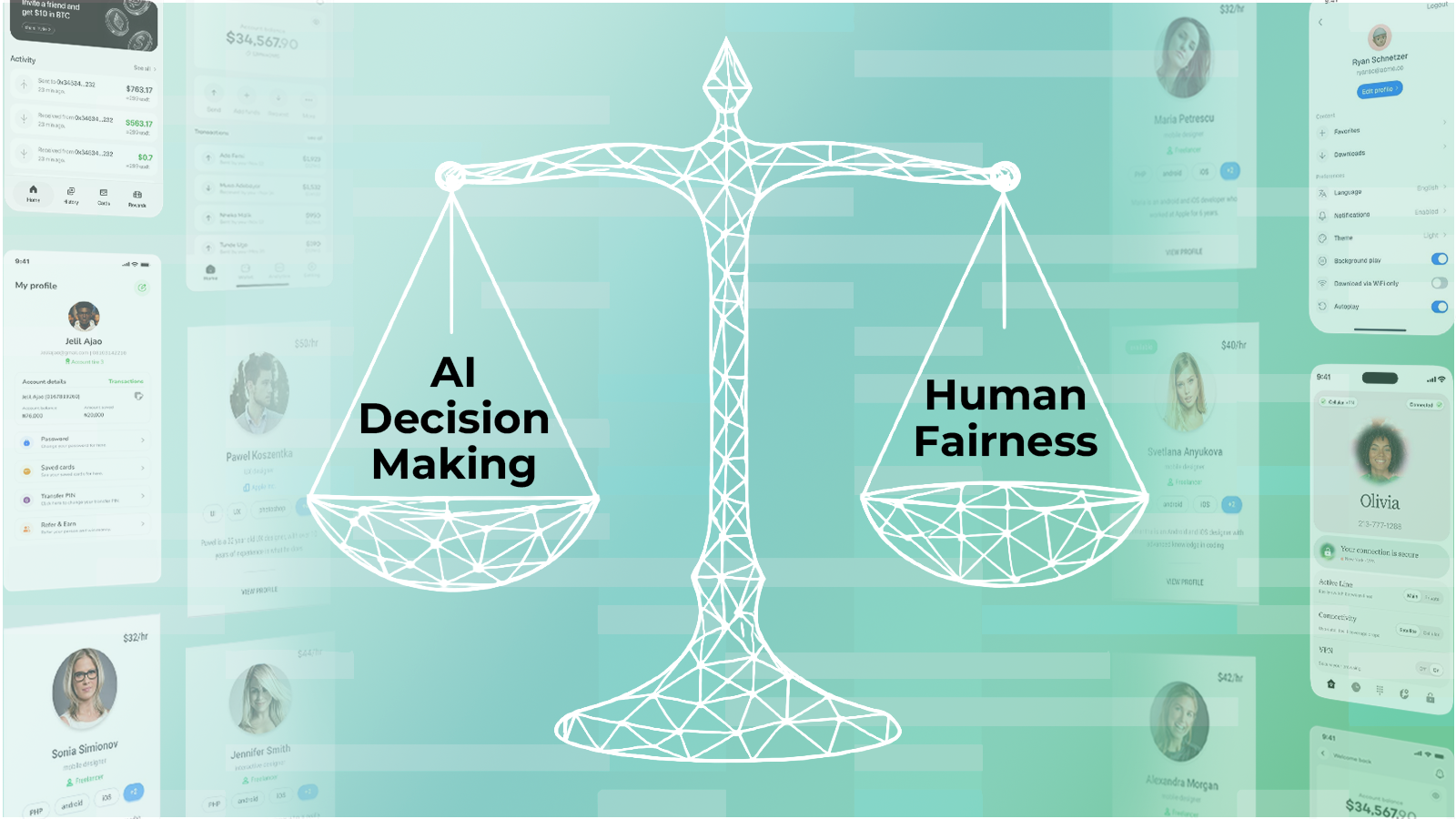
- AI bias in finance stems from skewed historical data, proxy variables, opaque models, and homogenous teams—leading to unfair credit, pricing, and risk decisions across demographics.
- Effective mitigation requires inclusive, representative datasets, early-lifecycle bias controls, routine fairness audits, explainable AI (XAI), and human oversight to keep automated decisioning accountable and reliable.
- Regulatory and compliance pressure is rising as global and regional frameworks (EU AI Act, FCA, FTC/CFPB, BIS, MAS FEAT, OJK AI Governance, BNM FTFC, Saudi AI Ethics Principles, UAE CPR, Mexico’s CNBV/Fintech Law) tighten expectations for fair, transparent, and auditable AI systems.
- Continuous monitoring and feedback loops are essential to detect model and fairness drift, sustaining equitable performance and supporting audit-ready documentation over time.
- Generative AI heightens bias risk when trained on uncurated data; strong data governance, ethical prompt controls, and real-time monitoring are needed to prevent harmful or non-compliant outputs.
- TrustDecision platforms (Credit Risk Management, Fraud Management, Identity Verification) embed fairness, explainability, and governance by design—supporting traceable, compliant, and inclusive AI-driven decisions across the customer lifecycle.
Why AI Bias Matters in Financial Services
AI now shapes how institutions lend, price risk, and detect fraud. Left unchecked, algorithms can replicate historical inequalities—denying credit, mispricing loans, or excluding customers.
The stakes are high: bias erodes trust, attracts regulatory scrutiny, and undermines inclusion. This guide explains how to identify and mitigate AI bias, strengthen governance, and align with global expectations—so you can advance transformation without sacrificing fairness.
What Is AI Bias in Financial Services?
AI bias occurs when algorithms produce unjustified or discriminatory outcomes due to skewed data, flawed modeling, or biased input variables.
In finance, these biases can influence credit scoring, underwriting, fraud detection, and even customer support chatbots, resulting in unequal treatment across demographics.
In financial services, AI bias occurs when algorithms generate unfair or unequal outcomes due to biased training data, missing information, or model assumptions that inadvertently reinforce existing inequalities (Corporate Finance Institute, 2024).
Bias not only undermines fairness but also exposes institutions to regulatory penalties and reputational damage, making responsible AI governance essential.
TL;DR - AI Bias in Financial Services
AI bias in finance leads to unfair credit, pricing, and risk decisions when models rely on skewed data or opaque logic. Institutions must strengthen governance, audit models regularly, and adopt explainable AI to ensure fairness and regulatory compliance.
What Causes AI Bias in Finance?
1. Historical and Incomplete Data
Models trained on historical lending or payment data may inherit past discrimination, for example, excluding regions or occupations historically denied credit.
2. Proxy Variables and Correlated Features
Variables like zip code, education level, or transaction type can indirectly proxy protected traits, leading to unintended bias.
3. Lack of Diversity in AI Teams
Homogenous development teams may overlook bias indicators affecting minority or low-income customers.
4. Limited Transparency in Models
“Black-box” algorithms make it difficult to understand or challenge discriminatory patterns, reducing explainability and trust.
According to Gartner’s Market Guide for Fraud Detection in Banking (2024), lack of transparency in ML models and fragmented data pipelines remain top challenges for
What Are Examples of AI Bias in Financial Services?
Bias manifests across banking functions:
- Gender bias — credit card algorithms offering lower limits to women with equal credit profiles.
- Mortgage bias — higher loan rejection rates for minority applicants despite comparable risk scores.
- Insurance discrimination — pricing models assigning higher premiums based on correlated demographic proxies.
Such incidents highlight why bias detection and fairness audits must be integrated early in AI system design.
How Does AI Bias Impact Financial Institutions and Customers?
AI bias impacts both sides of the financial relationship:
- Customers: Unfair denial of credit, unequal pricing, or exclusion from essential financial products.
- Institutions: Regulatory scrutiny, fines, customer attrition, and erosion of trust.
The Bank for International Settlements (BIS) notes that algorithmic discrimination can expose banks to compliance violations under consumer protection and fair lending laws, emphasizing the need for explainability and human oversight.
Drive Fairer Lending with Explainable AI
TrustDecision’s Credit Risk Management solution empowers financial institutions to make transparent, bias-free credit evaluations. By combining explainable AI, adaptive data modeling, and multi-source data enrichment, it ensures every lending decision is fair, data-driven, and fully auditable — strengthening both regulatory trust and customer confidence.
Related Reading: What Is Alternative Data & How It Helps with Financial Inclusion
Discover how alternative data—such as utility payments, mobile behavior, and digital transaction patterns—helps lenders assess creditworthiness for underserved populations.
How Can Financial Institutions Mitigate AI Bias
To build equitable, transparent, and compliant AI systems, banks should adopt a six-step fairness framework.
1. Inclusive and Representative Data
Ensure datasets represent diverse demographics and avoid proxy variables that encode bias. Apply data lineage tracking to understand data origins and transformations.
2. Algorithmic Fairness and Audits
Conduct pre-deployment fairness testing and post-deployment bias audits using metrics such as disparate impact and equal opportunity difference. Fairness audits, when combined with balanced and representative datasets, help significantly reduce systemic bias and improve the reliability of credit decisioning models.
3. Transparency and Explainability
Leverage Explainable AI (XAI) to interpret model logic and visualize decision pathways. Explainability enhances regulator and customer confidence.
4. Accountability and Governance
Adopt DEI-based governance frameworks and appoint ethical AI boards responsible for oversight, documentation, and continuous fairness reviews.
See TrustDecision’s PISTIS® Credit Management Platform that feature auditable decision trails and modular AI governance controls aligned with industry best practices.
5. Human Oversight and Ethical Judgment
Pair AI decisions with human review for complex or borderline cases — a human-in-the-loop model ensures contextual understanding.
6. Continuous Monitoring and Feedback
Establish real-time model drift detection and feedback loops to identify fairness degradation.
Gartner emphasizes that modern transaction monitoring systems now integrate continuous ML model updates and intra-day bias corrections for improved accuracy.
Which Regulatory Bodies Oversee AI Fairness in Banking?
Global regulators are formalizing fairness standards in financial AI:
- European Union AI Act (2025): Classifies credit scoring and lending as “high-risk,” mandating transparency, human oversight, and record-keeping.
- U.S. Federal Trade Commission (FTC): Enforces fairness in automated credit and lending decisions under the Equal Credit Opportunity Act.
- Financial Conduct Authority (FCA, UK): Requires explainability and fairness in consumer credit AI applications.
- Bank for International Settlements (BIS): Provides global guidance for ethical AI adoption and data governance frameworks.
Southeast Asia:
- Singapore – Monetary Authority of Singapore (MAS)
MAS’s FEAT Principles (Fairness, Ethics, Accountability, Transparency) guide how banks use AI and data analytics, requiring firms to monitor models so AI decisions do not unfairly disadvantage any group. - Indonesia – Otoritas Jasa Keuangan (OJK)
OJK’s “Artificial Intelligence Governance for Indonesian Banks” (2025) sets expectations for responsible AI in credit and risk, emphasising fairness, transparency, explainability, and strong human oversight. - Malaysia – Bank Negara Malaysia (BNM)
BNM’s Fair Treatment of Financial Consumers (FTFC) policy requires fair, transparent treatment across the product life cycle, including digital and automated decisions, with extra safeguards for vulnerable customers.
Middle East:
- Saudi Arabia’s AI Ethics Principles and the United Arab Emirates Central Bank’s Consumer Protection Regulation require fair, non-discriminatory use of data and AI in financial services, with clear accountability for outcomes.
Mexico:
- Mexico’s National Banking and Securities Commission (CNBV) leads supervision under Mexico’s Fintech Law, with ongoing “Fintech Law 2.0” reforms expanding oversight of AI-driven credit scoring and open finance to balance innovation with consumer protection.
Best Practices for Documenting Bias Detection and Testing
Proper documentation ensures transparency, accountability, and regulatory readiness.
- Model Cards: Record training datasets, performance metrics, and fairness testing results.
- Data Provenance: Maintain logs of data sources, preprocessing, and feature selection decisions.
- Explainability Reports: Archive interpretability outputs for compliance audits.
Integrate explainability and documentation within customer verification systems like Identity Verification, which supports traceable decision workflows and model reporting.
The Role of Generative AI — How Is GenAI Changing the Bias Landscape
Generative AI introduces new bias challenges. Models trained on vast, uncurated data risk amplifying stereotypes or misinformation. Protect against it by:
- Data Quality Controls: GenAI systems must validate and sanitize training sources to avoid propagating latent bias.
- Prompt Engineering: Use ethical prompt frameworks and domain-tuned models to control outputs.
- Governance-in-Production: Establish robust model governance to monitor hallucinations, toxicity, and fairness metrics in real time, ensuring all model outputs remain transparent and compliant.
Explore Fraud Detection in Banking: 2025 Future Trends & Predictions to see how AI analytics, behavioral biometrics, and real-time decision engines are reshaping fraud prevention, customer protection, and responsible AI use in banking.
Why Ethical AI Creates Business Value
Ethical and bias-free AI is not just a compliance goal — it’s a business advantage.
- Strengthens Consumer Trust: Transparent AI enhances customer confidence in digital decisioning.
- Expands Market Inclusion: Fair lending models open access to underbanked segments.
- Protects Brand Reputation: Reduces the risk of litigation and public backlash.
- Drives Sustainable Innovation: Enables scalable, compliant automation without sacrificing ethics.
TrustDecision’s Credit Risk Management and Fraud Management Solutions embed explainability and fairness governance, ensuring every decision is traceable, compliant, and equitable.
Conclusion — Building Trust Through Fair AI
By embedding fairness audits, explainable AI, and responsible governance into every model, financial institutions can ensure AI becomes a force for equity — not exclusion.
TrustDecision empowers banks and fintechs to build transparent, compliant, and bias-aware automation across the customer lifecycle. From Credit Risk Management and Fraud Management to Identity Verification, our AI-driven platforms deliver the transparency and accountability regulators demand — and customers expect.
Contact TrustDecision to discover our AI-powered solutions and request a demo to see how fairness and explainability can drive smarter, more inclusive decisioning across your organization.
References:
- Bank for International Settlements (BIS, 2024). Artificial Intelligence in Central Banking.
- Corporate Finance Institute (2024). The Ethics of AI in Finance: How to Detect and Prevent Bias.
- Gartner (2024). Buyer’s Guide for Fraud Detection Technology in Banking, pp. 3–7.
- Gartner (2024). Market Guide for Fraud Detection in Banking, pp. 9–11.
FAQs on AI Bias in Financial Services
1. What is AI bias in financial services?
AI bias refers to unfair or discriminatory outcomes caused by flawed data, algorithms, or modeling that disadvantage certain groups.
2. How does AI bias affect customers?
It can lead to unfair credit decisions, discriminatory pricing, or exclusion from financial products.
3. How TrustDecision help detect and mitigate AI bias?
TrustDecision’s Credit Risk Management and Fraud Management platforms use explainable AI, fairness audits, and multi-source data enrichment to minimise bias.
4. What causes AI bias in banking?
Historical data, lack of representative samples, and proxy features that correlate with protected traits.
5. How does TrustDecision ensure transparency in AI decisioning?
Through explainable AI modules, model version tracking, and fairness monitoring available across TrustDecision’s Identity Verification workflows.
6. What regulations govern AI fairness in finance?
Key frameworks include the EU AI Act, FCA (UK), FTC/CFPB (US) and BIS guidance, plus regional rules like Southeast Asia’s MAS FEAT (Singapore), OJK AI Governance (Indonesia), BNM FTFC (Malaysia), Saudi AI Ethics Principles, the UAE’s CPR, and Mexico’s CNBV/Fintech Law.
7. How does human oversight enhance AI fairness?
Human-in-the-loop systems provide ethical judgment where algorithms may miss context.
8. What steps can firms take to monitor AI bias post-deployment?
Regular fairness audits, demographic performance tracking, and model drift monitoring.
9. How does TrustDecision’s governance framework support compliance?
TrustDecision embeds configurable policy controls aligned with AML/KYC and fairness standards across its Fraud Management and Credit Risk Management platforms.
10. Why is bias-free AI critical for the future of finance?
Because fair and accountable AI strengthens trust, promotes inclusion, and drives sustainable innovation.





.jpeg)