BANGKOK, 23 April 2026 – TrustDecision, a Singapore-headquartered risk intelligence provider, has announced the expansion of its Agentic AI capabilities for banks and fintechs across Southeast Asia, bringing AI-driven automation to credit risk and fraud detection workflows. Financial institutions across Southeast Asia have been moving from rule-based systems to AI-powered decision intelligence platforms and now exploring agentic AI integration. As adoption accelerates, the challenge is shifting from model capability to governance, control, and explainability in real-world operations.
TrustDecision announced its agentic AI capabilities at Money20/20 Asia in Bangkok this week, as part of its broader vision for an adaptive, AI-native decisioning infrastructure. These capabilities are embedded within TrustDecision’s unified platform, used for fraud detection and credit risk decisioning, enabling institutions to operationalise AI across the full lifecycle of risk decisioning.
At the core of its approach is a set of domain-specific AI agents designed to translate intelligence into action across real-world scenarios. These include:
- Investigation AI agent supports fraud and money laundering case analysis. From data retrieval and fund tracing to behavioural analysis and report generation, it enables faster, more consistent investigation workflows through human-AI collaboration
- Rule mining AI agent converts investigation outcomes and risk signals into deployable rules and model features. This helps institutions evolve from case-by-case handling to systematic, reusable, and continuously improving risk strategies.
Working together, these agents form a closed-loop system, connecting detection, investigation and strategy optimisation that’ll enable a more adaptive and scalable risk decisioning framework.
As institutions move from pilot to production, they are facing trade-offs that were easier to overlook before. While autonomous AI agents can help reduce costs and improve efficiency, they also bring challenges around compliance, auditability, and accountability. TrustDecision believes the key is not just what AI can do, but how it is built, managed, and governed in real-world use. AI agents are best applied to high-volume, lower-risk tasks such as transaction flagging and application pre-scoring. More critical decisions should remain under clear controls with human oversight.
Henry Li Nan, Managing Director for Singapore, Malaysia & Thailand at TrustDecision, said: “Many incumbent banks are actively exploring AI today, and the pace of technological advancement has been faster than expected. But in regulated financial environments, the focus is not just autonomy, it’s on control. While AI agents can take on more operational tasks, institutions are adopting a measured approach, with human-AI collaboration at the core. Higher-risk decisions still require human oversight, and there is a strong emphasis on model transparency and operating within clearly defined regulatory boundaries.”
Thailand is one of the markets where this shift is becoming more immediate. As the first batch of virtual banks is expected by mid-2026, institutions are under pressure to build digital-first operating environments that are both efficient and compliant. That creates more room for AI-native infrastructure, while raising the importance of accountability and transparency in financial decision-making
Across Southeast Asia, adoption remains uneven. Some markets are moving more quickly in digital banking and real-time decisioning, while others continue to build foundational capabilities. What is becoming more consistent, according to TrustDecision, is the shift in mindset, moving from whether AI should be used at all to how it remains controllable in production.
Dr Simon Liu, Chief Data and AI Officer at TrustDecision, said: “The capability questions are largely answered. AI can make faster, more consistent decisions than manual processes in almost every financial workflow we handle. In regulated financial services, the more important question is how the system behaves once it is live. That means understanding where autonomous decision is appropriate, where controls need to sit, and how institutions detect when a system is operating outside the boundaries they have set.”
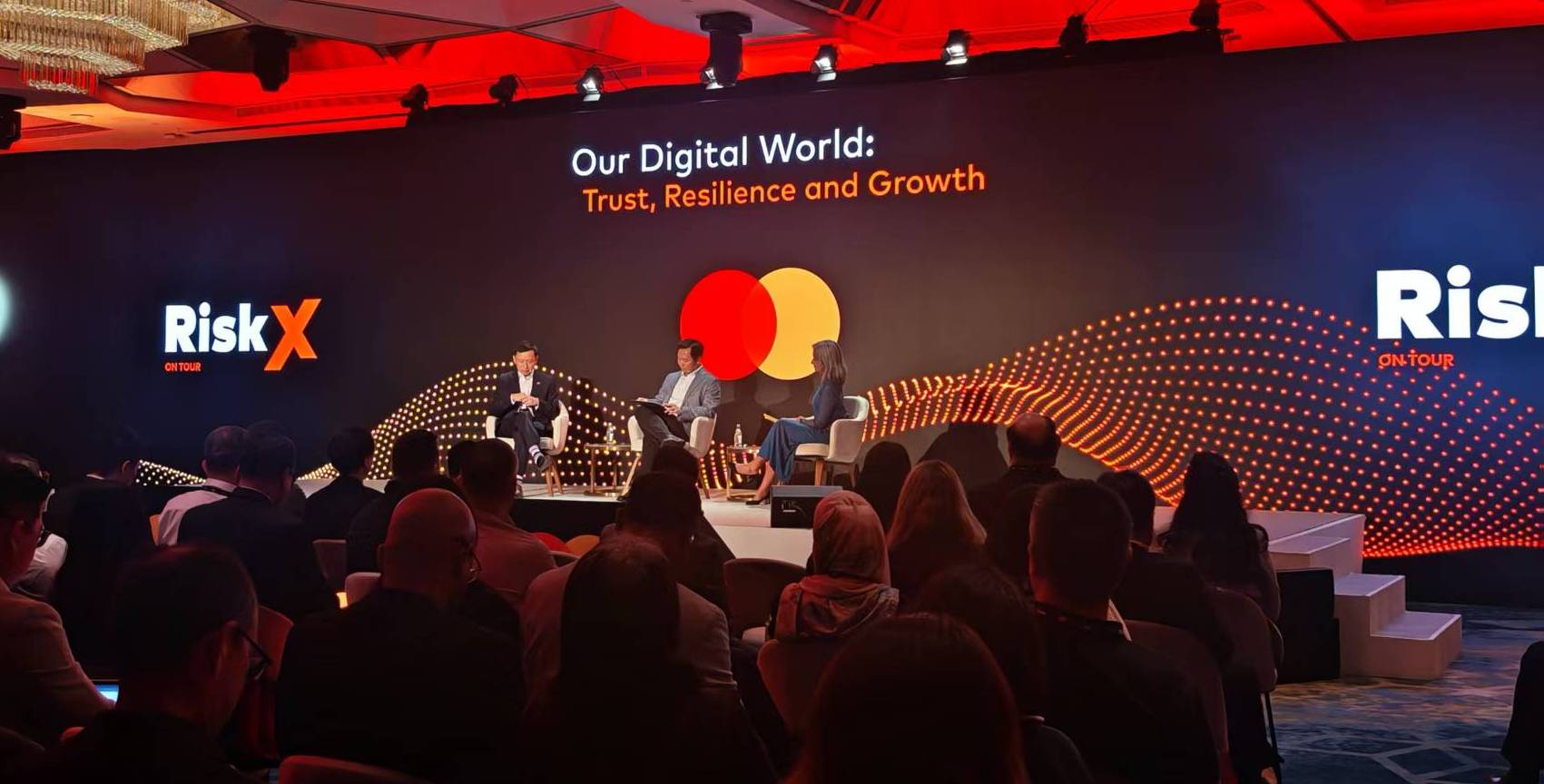
TrustDecision shared this perspective during Money20/20 Asia in Bangkok this week, where the company participated in discussions on the growing role of AI in financial decision-making. Dr Liu joined a panel on agentic finance and the role of AI as a financial actor, while Henry Li Nan attended the Policy20 Roundtable, a closed-door session involving roughly 40 regulators and policy stakeholders from across APAC.
As financial institutions in the region move from experimentation to deployment, TrustDecision said the next phase of adoption will depend less on model performance alone and more on whether institutions can build governance structures that are fit for live financial environments.
Also covered by: Nation Thailand, Bangkok Biz News, Kaohoon, MGR Online, HoonSmart, Money & Banking, Tech Coffee House, Biz Talk News, FULL MAX, The Thai Press, and Innews.